
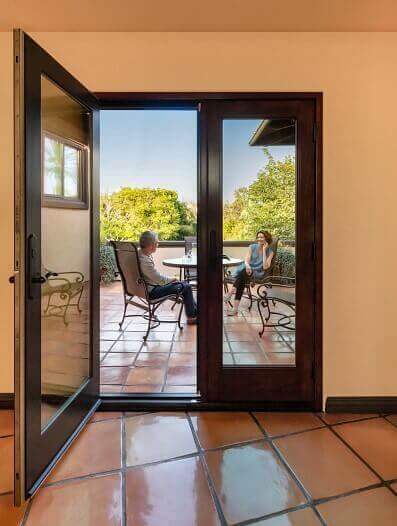
Double French doors create elegant transitions between rooms and outdoor spaces, offering classical beauty that complements various architectural styles.
Unlike sliding doors or large picture windows, French doors require precise rough opening dimensions to ensure proper fit, operation, and weather sealing.
Understanding rough opening requirements before construction or renovation prevents costly mistakes and ensures your new French doors operate flawlessly for years to come.
Proper planning during the framing stage sets the foundation for successful installation and optimal performance.
Understanding French Door Construction
Traditional French doors consist of two hinged panels that open outward or inward, typically featuring extensive glass panels within wooden or composite frames.
Standard configurations range from 48 to 96 inches wide, with heights typically matching standard door dimensions.
The rough opening must accommodate the door frame, installation shims, and proper insulation while maintaining structural integrity.
Unlike picture windows that mount in fixed openings, French doors require additional clearance for hinges, hardware, and thermal expansion.
Standard French Door Dimensions
Most French doors follow industry standard sizing:
Width Options:
- 48 inches (two 24-inch panels)
- 60 inches (two 30-inch panels)
- 72 inches (two 36-inch panels)
- 96 inches (two 48-inch panels)
Height Options:
- 80 inches (6 feet 8 inches)
- 96 inches (8 feet)
Custom dimensions are available but require special ordering and may affect rough opening calculations.
Calculating Rough Opening Dimensions
Width Calculation: Add 2 to 3 inches to the door frame width to accommodate shims and adjustments. For a 60-inch French door, plan a 62 to 63-inch rough opening width.
Height Calculation: Add 2.5 inches to the door height for the frame, shims, and threshold. An 80-inch door typically requires an 82.5-inch rough opening height.
Depth Considerations: Rough opening depth depends on wall construction, but typically requires 4.5 to 6.5 inches for proper frame installation and insulation.
Professional Measuring Techniques
Verify Door Specifications – Confirm actual door dimensions with manufacturer specifications, as advertised sizes may differ from actual frame dimensions.
Account for Flooring – Consider finished flooring thickness when calculating height requirements, especially with tile or hardwood installations.
Check for Square – Measure diagonally across the planned opening to ensure it’s square. Adjust framing as necessary before door installation.
Plan for Utilities – Identify electrical, plumbing, or HVAC components that might interfere with door installation and plan accordingly.
Common Installation Challenges
French door installation presents unique challenges compared to single doors or picture windows.
Proper rough opening preparation addresses structural support for wide openings, level installation across multiple panels, weather sealing for exterior applications, hardware clearance for handles and locks, and swing space planning for furniture placement.
Professional Installation Advantages
While rough opening preparation might seem straightforward, achieving professional results requires experience with various construction scenarios. At Mr. Rogers Windows, our installation specialists understand the nuances of french door installation, from historic home retrofits to new construction applications.
We work with contractors and homeowners to ensure rough openings meet exact specifications for optimal door performance.
Our team has experience with all door types, from traditional entry or patio doors to contemporary designs, and can adapt installation techniques to match specific project requirements.
Whether you’re planning a renovation that includes french doors, picture windows, or other architectural features, Mr. Rogers Windows provides the expertise needed for successful installations.
Contact us today to discuss your project today.




You must be logged in to post a comment.