
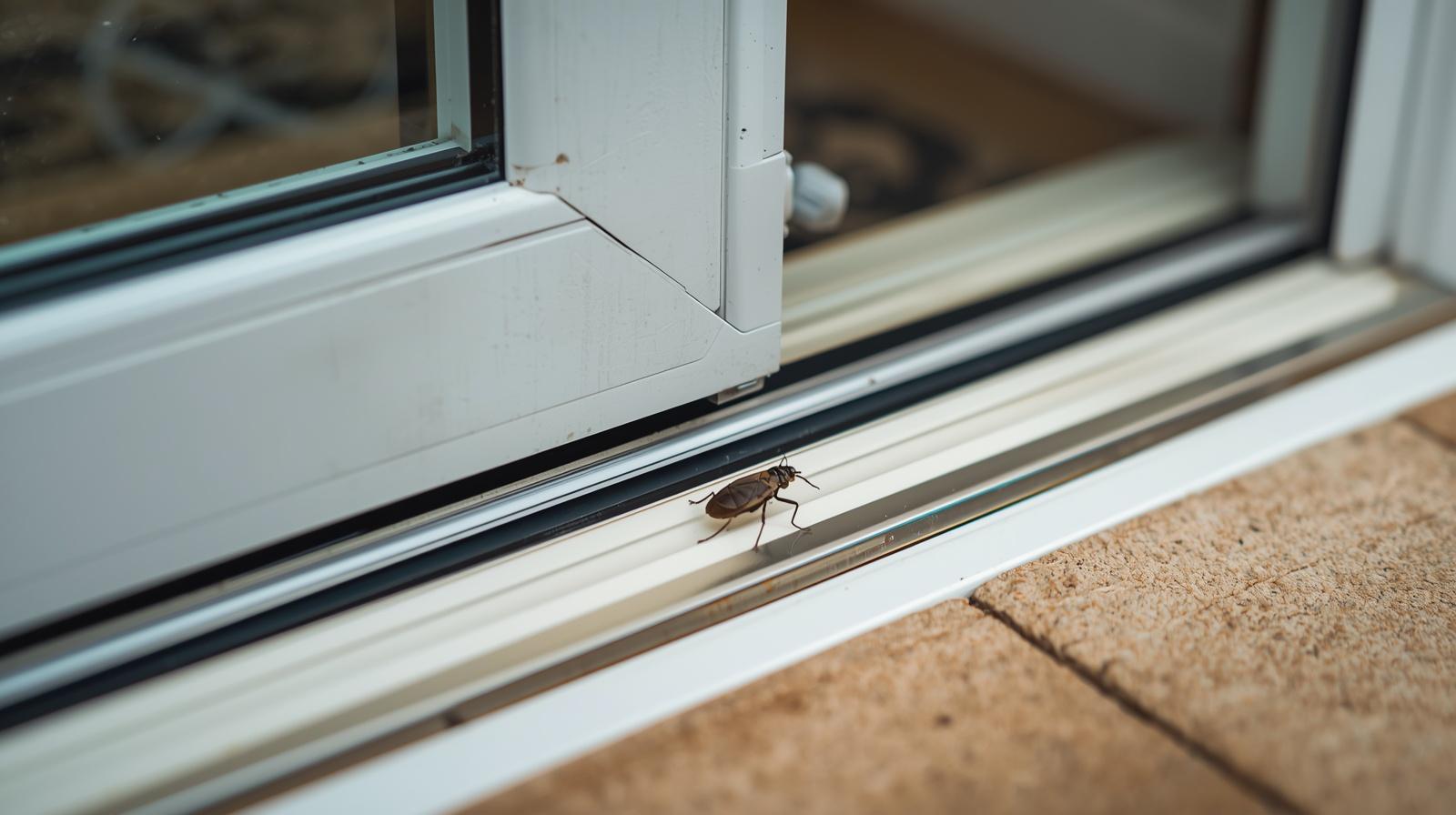
Why Do Pests Get In Through Sliding Doors?
Pests enter through sliding doors because of gaps in weatherstripping, damaged seals, dirty tracks that provide food sources, and lubricants that actually attract insects. In Hampton Roads, where warm weather and high humidity create an active pest environment for most of the year, your sliding door is one of the most vulnerable entry points in your home.
Sliding doors have more potential gaps than a standard door or window. The track channel along the bottom, the weatherstripping along the edges, the junction between the sliding panel and the fixed panel, and the threshold seal all create opportunities for insects and small pests to find their way inside.
When those components are worn, damaged, or improperly maintained, the problem gets worse.
But it’s not just about gaps. What you put on and around your sliding door matters too. Certain lubricants and cleaning products can actually draw pests toward the door rather than keeping them away. And the warm, sheltered track channel makes an inviting highway for ants, spiders, roaches, and other crawling insects.
The good news is that a few smart maintenance choices can make a real difference.
Here’s how to keep your sliding door from becoming a pest highway.
How Does the Wrong Lubricant Attract Bugs to Your Sliding Door?
Oil-based and petroleum-based lubricants attract dirt, which creates a gummy residue that insects feed on and are drawn to. If you’ve been using standard WD-40, 3-in-One oil, or similar products on your sliding door track, you may be unintentionally rolling out the welcome mat for pests.
Here’s what happens.
You spray an oil-based lubricant in the track to help the door slide more smoothly. It works great for a few days or weeks. But oil-based products are sticky by nature. They attract and trap dust, sand, pollen, and organic debris. In Hampton Roads, where sand, salt, and pollen are constantly blowing around, this buildup happens fast.
That gummy mixture becomes a food source and habitat for pests. Ants are drawn to the organic residue. Roaches and other crawling insects use the oily track as a protected pathway into your home. Spiders follow the other bugs. It becomes a self-reinforcing cycle: the lubricant attracts debris, the debris attracts insects, and the insects attract predators.
Light lubricants like sewing machine oil or household oil create the same problem on a smaller scale. Any product that stays wet or tacky on the surface will accumulate grime and attract pests over time.
The solution isn’t to skip lubrication entirely (an unlubricated track is hard on your door and rollers). It’s to use the right type of lubricant.
Why Is Silicone Spray the Best Choice for Pest Prevention?
Silicone spray lubricates your sliding door track without leaving the oily, tacky residue that attracts insects. It dries to a clean, slick film that repels dirt and moisture rather than trapping them.
Here’s why silicone spray works better than alternatives for keeping pests away:
- Dries clean. After application, silicone spray leaves a thin, dry barrier. There’s no wet, sticky surface for dirt to cling to or insects to walk through.
- Repels dirt and moisture. Instead of trapping debris like oil does, the silicone coating causes particles to slide off the surface. Your track stays cleaner between maintenance sessions.
- No food source for pests. Silicone is inorganic and doesn’t break down into anything insects are interested in. There’s nothing for ants, roaches, or other bugs to feed on.
- Resists humidity. In Hampton Roads’ 70-80% summer humidity, a product that doesn’t absorb or trap moisture is essential. Silicone spray keeps the track dry, which discourages both pests and corrosion.
- Long-lasting. A single application of quality silicone spray lasts longer than oil-based products because it doesn’t gum up with debris and need reapplication as often.
How to apply: After cleaning the track thoroughly (vacuum, scrub with soapy water, rinse, and dry), spray a light, even coat of silicone spray along the entire length of the bottom track. Slide the door back and forth to distribute it across the roller path. Wipe away any excess. Reapply every two to three months, or after cleaning the track.
Look for products labeled “silicone spray lubricant” or “dry silicone lubricant.” WD-40 Specialist Silicone is one widely available option. Just make sure you’re grabbing the silicone version, not the original WD-40 formula.

Can Cinnamon Really Keep Bugs Away from Your Sliding Door?
Yes. Ground cinnamon is a natural insect deterrent that works surprisingly well around sliding door tracks. Ants, roaches, silverfish, and many other common household pests avoid cinnamon because its strong scent disrupts their scent trails and irritates their sensory systems.
This isn’t just a folk remedy. Cinnamon contains cinnamaldehyde, a compound that has been studied for its insect-repellent properties. Research has shown it’s effective against ants in particular, which are one of the most common pests that use sliding door tracks as entry points.
How to use cinnamon around your sliding door:
- Sprinkle a thin line of ground cinnamon along the outside edge of the door track. Focus on the threshold area where the track meets your patio or deck. This creates a scent barrier that ants and other crawling insects won’t want to cross.
- Apply it along the exterior base of the door frame. Anywhere the door frame meets the house exterior is a potential entry point.
- Refresh after rain or heavy wind. Cinnamon washes away and disperses, so reapply after storms or whenever you notice the line has thinned out.
- Keep it outside. You don’t need cinnamon inside the track itself (that would interfere with the door’s operation). The barrier works best at the exterior entry points.
Cinnamon is safe around kids and pets, doesn’t stain most surfaces, and costs next to nothing. It’s not a permanent solution on its own, but combined with proper track cleaning, silicone lubrication, and good weatherstripping, it adds another layer of pest prevention that works well for Hampton Roads homeowners.
A note on cinnamon essential oil:
You can also use cinnamon essential oil diluted with water in a spray bottle for a longer-lasting application on hard surfaces around the door frame exterior. Just avoid spraying it directly on the track where the door operates.
What Other Steps Keep Pests Out of Your Sliding Door Track?
Beyond choosing the right lubricant and using natural deterrents, there are several maintenance and design steps to reduce pest entry through your sliding door.
Keep the track clean
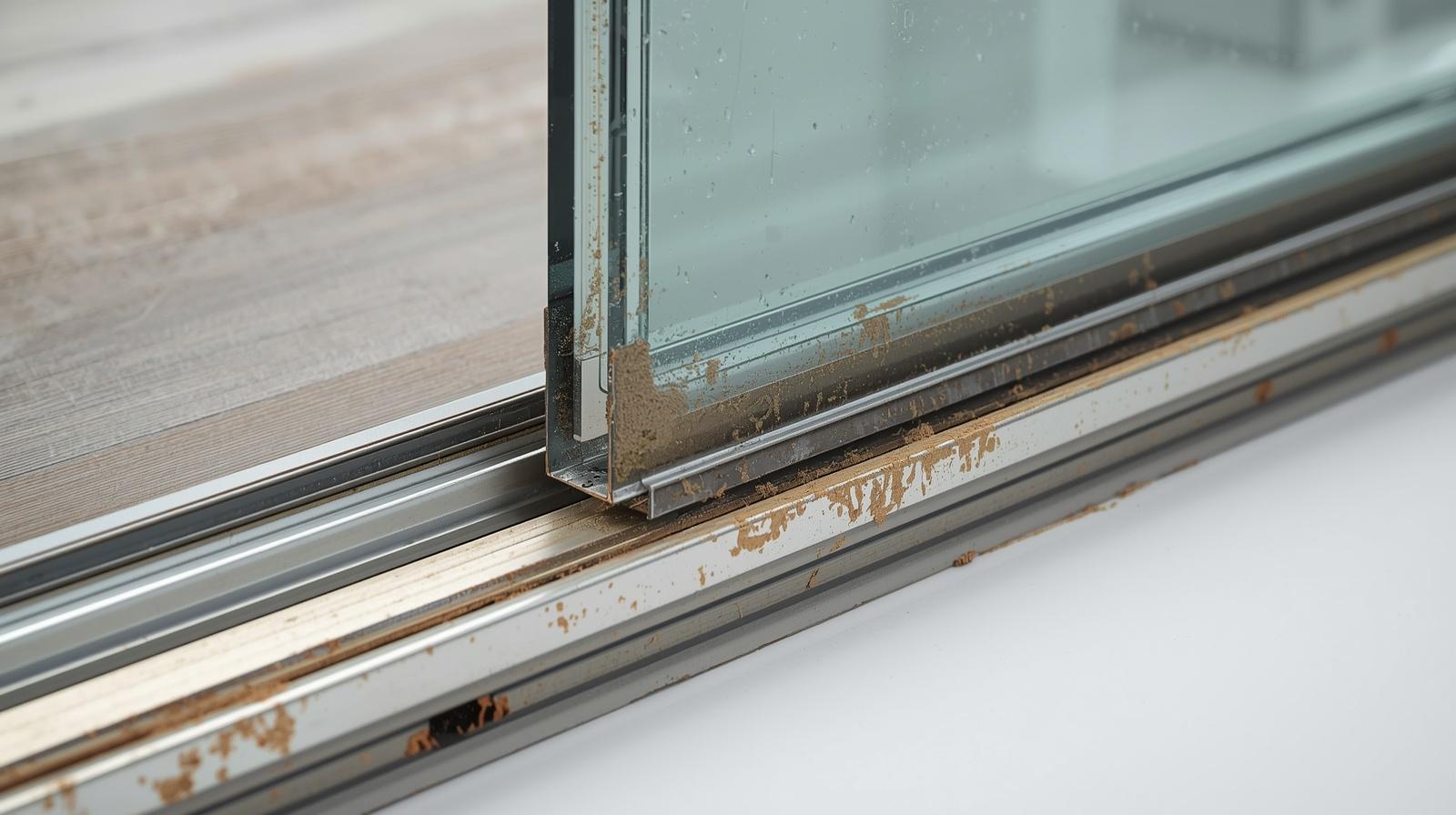
This is the single most impactful thing you can do. A clean track with no debris gives pests nothing to eat and nowhere to hide. Vacuum and wipe down the track every two to three months.
In Hampton Roads during summer, monthly cleaning is even better since that’s when pest activity peaks and sand and organic debris accumulate fastest.
Inspect and replace weatherstripping
Gaps in weatherstripping are the primary way pests get through a closed door. Check the seals along all edges of the door, including the junction between the sliding and fixed panels. If the weatherstripping is cracked, compressed flat, pulling away from the frame, or missing sections, replace it.
Even small gaps are enough for ants and spiders to enter.
Check the threshold seal
The bottom seal where the door meets the track is especially important. This area takes the most wear and is closest to ground level, where crawling insects approach. If you can see daylight or feel air movement at the base of your closed door, the threshold seal needs attention.
Maintain your screen door
A properly fitted screen door in good condition is your first line of defense when the sliding door is open.
Repair any tears or holes promptly. If the screen doesn’t sit flush in its track or has gaps at the edges, it’s not doing its job. Screen replacement is inexpensive and straightforward.
Keep the exterior area clean
Trim vegetation away from the door area. Plants touching or overhanging the door frame provide a bridge for insects to reach the door.
Sweep the patio or deck near the door regularly to remove leaf litter and organic debris that attract pests. Don’t store firewood, mulch, or compost bins near the sliding door.
When Should You Replace Your Sliding Door to Solve a Pest Problem?
If your sliding door has persistent pest issues despite regular maintenance, the door itself may be the problem. Warped frames, corroded tracks, deteriorated seals, and gaps that can’t be sealed are all signs that replacement is the real solution.
Replace rather than repair when:
- Weatherstripping won’t stay seated. If the frame is warped or the channels that hold the weatherstripping have deteriorated, new weatherstripping won’t seal properly, no matter how carefully you install it.
- The track is corroded. Pitted, rough, or rusted tracks can’t be restored to a smooth, cleanable surface. Every pit and rough spot traps debris and provides shelter for insects.
- The door doesn’t close flush. If there are visible gaps between the closed door and the frame that persist after roller adjustment, the frame geometry has changed and cannot be corrected.
- The frame itself has gaps or cracks. Damaged frames create permanent entry points that no amount of caulking or sealing will permanently fix.
- The door is over 15 years old. At that age in Hampton Roads’ climate, the combination of seal degradation, frame wear, and component corrosion typically creates more pest entry points than maintenance can address.
A new sliding door from Renewal by Andersen (available through Mr. Rogers Windows) addresses pest vulnerability at the design level. Fibrex composite frames don’t warp, rot, or corrode, so they maintain tight tolerances for decades.
Factory-installed weatherstripping is precision-fitted. The track design minimizes debris accumulation.
And modern seals create a tighter barrier than what was available even 10 years ago.
Frequently Asked Questions
What bugs are most likely to come in through a sliding door?
In Hampton Roads, the most common sliding-door pests are ants (especially in spring and summer), roaches (particularly the larger American cockroach or “palmetto bug”), spiders, silverfish, and earwigs. All of these are attracted to the sheltered environment of a dirty door track and can squeeze through surprisingly small gaps in weatherstripping.
Does leaving a sliding door open attract more pests?
Yes. Any time the door is open without a properly fitted screen in place, you’re inviting flying and crawling insects inside. If you like keeping the door open for airflow, make sure your screen door is in good condition with no tears, holes, or gaps.
Is there a way to pest-proof a sliding door permanently?
No single solution is permanent, but a new door with quality Fibrex composite frames, factory-sealed weatherstripping, and a precision-fit track comes the closest. Combine that with regular cleaning, silicone lubrication, and a cinnamon barrier at the exterior threshold, and you’ll minimize pest entry as much as physically possible.
How do I get rid of ants that are already in my sliding door track?
First, vacuum the track thoroughly to remove ants and the debris they’re feeding on. Clean with soapy water and dry completely. Then apply silicone spray lubricant (not oil-based) to the track. Finally, lay a line of ground cinnamon along the exterior side of the threshold to deter new ants from approaching.
Do pest control sprays work on sliding door tracks?
Chemical pest sprays can be applied around the exterior perimeter of a sliding door, but avoid spraying inside the track itself. Chemical residue in the track can interfere with the door’s operation, damage weatherstripping and rollers, and create a surface that traps dirt. Stick with silicone spray for the track and use pest deterrents (like cinnamon) at the exterior entry points.
Can bugs get in through a closed sliding door?
Yes, if the weatherstripping is worn, the door doesn’t close flush, or there are gaps at the threshold or between the panels. Even gaps that look too small to matter can admit ants, spiders, and other small insects. A properly sealed door with intact weatherstripping eliminates most of these entry points.
Need a Sliding Door That Keeps Pests Out?
If your sliding door is letting pests in despite your best maintenance efforts, it may be time for an upgrade. Mr. Rogers Windows offers free, no-obligation consultations for patio doors and windows throughout Hampton Roads.
Mr. Rogers Windows 📍 2100 Scenic Parkway, Suite 101, Chesapeake, VA 23323 📞 (757) 512-6242 🕐 Monday – Friday: 8:30am – 5:00pm | Saturday – Sunday: Closed
In Your Free Consultation: – Discuss your needs and priorities – See samples of all window styles – Review color and customization options – Get precise measurements – Receive detailed quote (valid 1 year) – No pressure, no obligation
Serving Hampton Roads Since 1986: Tidewater, Virginia Beach, Norfolk, Chesapeake, Suffolk, Newport News, Hampton, Portsmouth, Yorktown, Williamsburg, Smithfield, Gloucester, Elizabeth City, Moyock, Outer Banks, and surrounding communities.
Mr. Rogers Windows is Tidewater’s exclusive source for Renewal by Andersen replacement windows and patio doors. We combine 39 years of local expertise with industry-leading products and factory-trained installation to enhance the comfort, efficiency, and value of your home.



You must be logged in to post a comment.