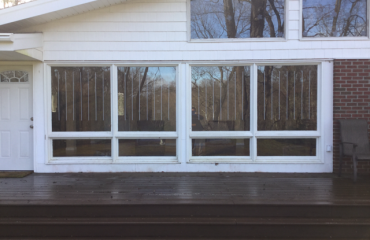
What Are the Warning Signs You Need New Windows?
There are 12 key signs your windows need replacement. Some call for immediate action, while others give you time to plan.
Here’s what to watch for:
- Fog or condensation between panes — seal failure (high urgency)
- Drafts near closed windows — air infiltration (high urgency)
- Hard to open or close — frame warping or hardware failure (medium urgency)
- Windows won’t stay open — balance mechanism failure (medium urgency)
- Visible rot on frames — water damage or age (high urgency)
- Cracking or peeling frames — material failure (medium urgency)
- Water stains below windows — active leaks (high urgency)
- Higher energy bills — efficiency loss (medium urgency)
- Excessive outside noise — poor insulation (medium urgency)
- Fading furniture near windows — UV protection failure (medium urgency)
- Windows over 20 years old — end of lifespan (medium urgency)
- Single-pane glass — outdated technology (high urgency)
If you’re seeing 3+ of these signs, your windows need replacement. Even a single high-urgency sign warrants immediate attention.
Why Is There Fog Between My Window Panes?
Fog or condensation between glass panes means the window seal has failed. The insulating gas has escaped, and your window has lost most of its energy efficiency.
What Causes Foggy Windows?
Double and triple-pane windows have sealed spaces between the glass filled with insulating gas, usually argon. Over time, temperature changes cause the glass to expand and contract, which eventually breaks that seal. Once it fails, the insulating gas escapes, moisture works its way in, condensation forms between the panes, and the window loses more than half its insulation value.
Is Foggy Window Condensation Dangerous?
Fog between panes isn’t directly dangerous, but it signals real problems. You’ll likely see 15–30% higher heating and cooling costs, your views get obscured, mold can develop if moisture spreads to the frame, and it’s a visible defect that reduces your home’s value if you’re looking to sell.
Can Foggy Windows Be Fixed Without Replacement?
Some companies offer “defogging” services where they drill a small hole to release trapped moisture. It’s a temporary fix at best. The process doesn’t restore the insulating gas, doesn’t repair the broken seal, and the fog typically comes back within one to three years.
Where Is Condensation Normal vs. a Problem?
Not all condensation means something is wrong. Condensation between panes means your seal has failed and the window needs replacement. Condensation on the inside surface during winter mornings means your indoor humidity is high, and improving ventilation with bathroom or kitchen fans usually solves it. Condensation on the outside surface on summer mornings is actually a good sign — it means your glass is cold enough from indoor AC that outdoor humidity condenses on it. Your windows are working exactly as they should.
Why Do I Feel Drafts Around Closed Windows?
Drafts around closed windows mean air is leaking into your home. This is one of the most expensive window problems because it directly increases your energy bills every single month.
How to Test for Window Drafts
There are four easy ways to check:
Hand test: On a cool, breezy day, hold your hand near the window edges with the window closed. Move slowly around the entire perimeter. If you feel cold air moving, you have a draft.
Candle or lighter test: Hold a lit candle near the window edges. If the flame flickers or bends, air is getting through.
Dollar bill test: Close your window on a dollar bill and try to pull it out. If it slides easily, your sash isn’t sealing properly.
Incense test: Light incense and hold it near the window edges. Watch for smoke movement that shows airflow.
What Causes Window Drafts?
The most common causes are worn weatherstripping (the rubber or foam seals have deteriorated), warped frames from humidity exposure, failed sash seals that create gaps between the sash and frame, poor original installation, and foundation settling that has shifted your home enough to create gaps. Of these, worn weatherstripping is sometimes repairable as a temporary measure, but warped frames and failed sash seals require full replacement.
Why Are My Windows Hard to Open or Close?
Windows that stick, jam, or won’t stay open have problems with their frame, hardware, or balance mechanism. This is especially common in Hampton Roads, where our humidity regularly hits 70–80% during summer.
Why Hampton Roads Windows Stick More Often
Our climate creates a punishing cycle for windows. In summer, high humidity causes wood windows to absorb moisture and swell. In winter, they shrink and develop gaps. This constant expansion and contraction accelerates wear year after year.
You’ll know humidity is affecting your windows if they stick in summer but have gaps in winter, you can see visible swelling or warping on wood frames, paint is bubbling or peeling on the frames, or the difficulty operating them changes noticeably with the weather.
Are Window Operation Problems Dangerous?
Yes. Windows that won’t open block fire escapes in an emergency. Windows that slam shut can injure anyone nearby, especially children. Windows that won’t lock create a security vulnerability. And windows that can be forced open are an invitation for break-ins.
What Does Window Frame Damage Look Like?
Frame damage includes rot, cracks, warping, peeling, and separation from the wall. Some damage is obvious at a glance, but other signs take a closer look to catch.
Wood rot shows up as soft spots, discoloration, or crumbling material. You can test for it by pressing a screwdriver firmly into any suspected soft spot. If it penetrates easily or the wood crumbles, rot is present. Important: rot often extends much deeper than what’s visible on the surface. A small soft spot may be hiding extensive decay underneath.
Vinyl cracking typically appears at the corners first. Warping shows up as the frame pulling away from square. Paint failure presents as bubbling, peeling, or flaking. Caulk gaps, where the frame separates from the wall, let both air and water in. And mold or mildew shows as black or green spots on or near the frame.
Frame Damage Unique to Hampton Roads
Living near the coast accelerates specific types of damage. Salt air corrodes aluminum frames and metal hardware. High humidity drives rot, mold, and swelling in wood and lower-quality vinyl. Intense sun warps and fades vinyl and wood over time. And storm exposure can cause seal failures and water infiltration across all window types.
Fibrex composite, used in Renewal by Andersen windows from Mr. Rogers Windows, resists all of these coastal factors, which is why it’s particularly well-suited for Hampton Roads homes.
Why Are My Energy Bills So High?
If your energy bills are climbing without any obvious explanation, your windows may be losing efficiency. Old or failing windows force your HVAC system to work harder to maintain temperature.
The difference is measurable. Modern Low-E windows set the baseline. Windows that are 10 years old typically add 5–10% to your energy costs. At 20 years, that jumps to 15–25%. Windows with failed seals can add 20–35%. And if you still have single-pane glass, you could be paying 40–60% more than you need to.
Energy Bill Warning Signs
Your windows are likely the problem if your bills keep increasing without changes in usage, your HVAC runs constantly during extreme weather, rooms near windows are noticeably hotter or colder than the rest of the house, you’re constantly adjusting the thermostat, or newer windows in part of your home feel dramatically different from the old ones.
Hampton Roads Energy Considerations
Our climate makes window efficiency especially important. Summers running from May through September mean heavy AC usage, and inefficient glass translates directly into major cooling losses. Year-round humidity means failed seals contribute to indoor moisture problems. And winters from December through February bring heating costs that poor insulation makes worse.
Why Can I Hear Outside Noise Through My Windows?
If outside noise is clearly audible inside your home, it usually means single-pane glass, failed seals, or low-quality windows. The improvement from upgrading can be dramatic.
Single-pane windows offer a Sound Transmission Class (STC) rating of just 26–28, which means conversations and traffic come through clearly. Old double-pane windows improve that to 28–32, but noise is still noticeable. New double-pane windows with Low-E coatings reach 34–38, muting most sounds significantly. Triple-pane or laminated glass options push STC ratings to 38–45, approaching near-silence from outside.
When Noise Reduction Matters Most in Hampton Roads
If you live near I-64 or I-264, under flight paths for Norfolk Airport or Oceana, near military base activity, or in a busy downtown area, upgrading to triple-pane or laminated glass makes a real quality-of-life difference. Beach communities typically find standard double-pane adequate for ocean and crowd noise.
Why Is Furniture Fading Near My Windows?
Fading furniture, flooring, and artwork near your windows is UV radiation damage. Older windows without Low-E coatings let harmful UV rays pass through and slowly destroy your interior belongings.
Single-pane windows block less than 25% of UV rays, which leads to severe fading over time. Standard double-pane blocks 40–50%, reducing the damage to moderate levels. Low-E double-pane windows block 75–85%, bringing fading down to minimal levels. And Renewal by Andersen’s SmartSun Low-E4 glass blocks over 95%, making UV damage essentially negligible.
How Do I Know If My Windows Are Leaking Water?
Water stains, mold, peeling paint, or soft drywall near your windows all point to leaks. Window leaks cause serious damage if you don’t address them quickly.
Watch for water stains on the wall below the window, bubbling paint on the frame or wall, soft or spongy drywall around the window opening, musty odors near the window, visible mold in frame corners or on the wall, peeling wallpaper near the window, or a stained or damaged sill.
What Causes Window Leaks?
Common causes include deteriorated exterior caulk, damaged flashing (the metal drip edge that directs water away), cracks in the frame itself, clogged weep holes, and improper original installation. While recaulking can serve as a temporary fix and blocked weep holes can be cleared, most of these causes ultimately point toward replacement.
Why Window Leaks Are Urgent
The consequences escalate fast. Mold can start growing within days to weeks. Insulation damage happens within weeks. Wood rot develops over months and structural damage can accumulate over months to years. Acting early on a window leak saves you significantly compared to waiting.
How Old Is “Too Old” for Windows?
Most windows should be replaced after 15–25 years. In Hampton Roads’ coastal climate, the lower end of that range is more realistic for most materials.
Standard vinyl windows last 20–30 years nationally, but expect closer to 15–20 years in Hampton Roads. Premium vinyl stretches to 20–30 years locally. Wood windows, even well-maintained ones, tend to max out at 15–25 years near the coast. Aluminum frames last 15–20 years. Fiberglass pushes 30–40 years. And Fibrex composite, used by Renewal by Andersen, holds up for 35–40+ years even in our coastal conditions.
Technology Has Changed Dramatically
If your windows were installed before 1980, you likely have single-pane glass that’s 50–70% less efficient than modern options. Windows from the 1980s with early double-pane technology run about 40–50% less efficient. Even 2000s-era windows with improved Low-E coatings are 15–25% behind today’s technology. The efficiency gains from modern SmartSun glass and triple-pane options are substantial.
Should I Repair or Replace My Windows?
Replace when repairs would cost more than 50% of a new window’s price, when the issues affect energy efficiency, or when your windows are over 15 years old.
When Repair Makes Sense
Repair is worth considering if your windows are under 10 years old and just need new weatherstripping, a single hardware piece is broken and parts are available, minor caulk gaps are the only issue and the frame and seals are otherwise solid, or dirty or stuck tracks are the problem and cleaning resolves it.
When Replacement Is the Right Call
Always replace if you have seal failure with fog between panes (regardless of age), frame rot or structural damage, active water leaks, multiple operation problems where repair costs exceed 50% of a new window, windows that are 20+ years old with any problems at all, or single-pane glass.
If you find yourself needing two or more repairs on the same window, replacement becomes more cost-effective while also giving you modern energy efficiency and a full warranty.
Other Frequently Asked Questions
How do I know if my window seal is broken?
Fog, haze, or condensation between glass panes indicates seal failure. The insulating gas has escaped and moisture has entered. Replacement is the only permanent solution.
Why are my windows sweating on the inside?
Interior condensation means high indoor humidity, not window failure. Improve ventilation with bathroom/kitchen fans. However, if windows are cold enough to cause condensation, they may lack adequate insulation.
Can I just replace the glass instead of the whole window?
Insulated glass unit (IGU) replacement is possible, however, it doesn’t address frame issues, operation problems, or improved technology. For windows over 15 years old, full replacement provides better value.
Are drafty windows a fire hazard?
Drafty windows aren’t a fire hazard, but windows that won’t open are. Bedroom windows should open easily for emergency escape. Windows painted shut or with failed hardware create safety risks.
How many windows should I replace at once?
Replacing all windows at once saves 10-15% versus piecemeal replacement. If budget is limited, prioritize: 1) windows with failed seals or leaks, 2) south/west-facing windows (most sun exposure), 3) windows in frequently used rooms.
Do I need new windows if mine are only 10 years old?
Not necessarily. At 10 years, quality windows should still perform well. However, if you’re experiencing problems like seal failure, operation issues, or visible damage, replacement may be warranted regardless of age.
How long does window replacement take?
Each window installs in 30-60 minutes. Total project time from consultation to completion is 4-8 weeks, with most time spent manufacturing your custom windows.
Schedule Your Free Window Evaluation
Not sure if your windows need replacement? Mr. Rogers Windows offers free, no-obligation consultations. We’ll thoroughly evaluate your windows and provide honest recommendations.
Mr. Rogers Windows 📍 2100 Scenic Parkway, Suite 101, Chesapeake, VA 23323 📞 (757) 512-6242 🕐 Monday – Friday: 8:30am – 5:00pm | Saturday – Sunday: Closed
In Your Free Consultation: – Discuss your needs and priorities – See samples of all window styles – Review color and customization options – Get precise measurements – Receive detailed quote (valid 1 year) – No pressure, no obligation
Serving Hampton Roads Since 1986: Virginia Beach, Norfolk, Chesapeake, Suffolk, Newport News, Hampton, Portsmouth, Yorktown, Williamsburg, Smithfield, Gloucester, Elizabeth City, Moyock, Outer Banks, and surrounding communities.
Mr. Rogers Windows is Hampton Roads’ exclusive source for Renewal by Andersen replacement windows. We combine 39 years of local expertise with industry-leading products and factory-trained installation to enhance the comfort, efficiency, and value of your home.