
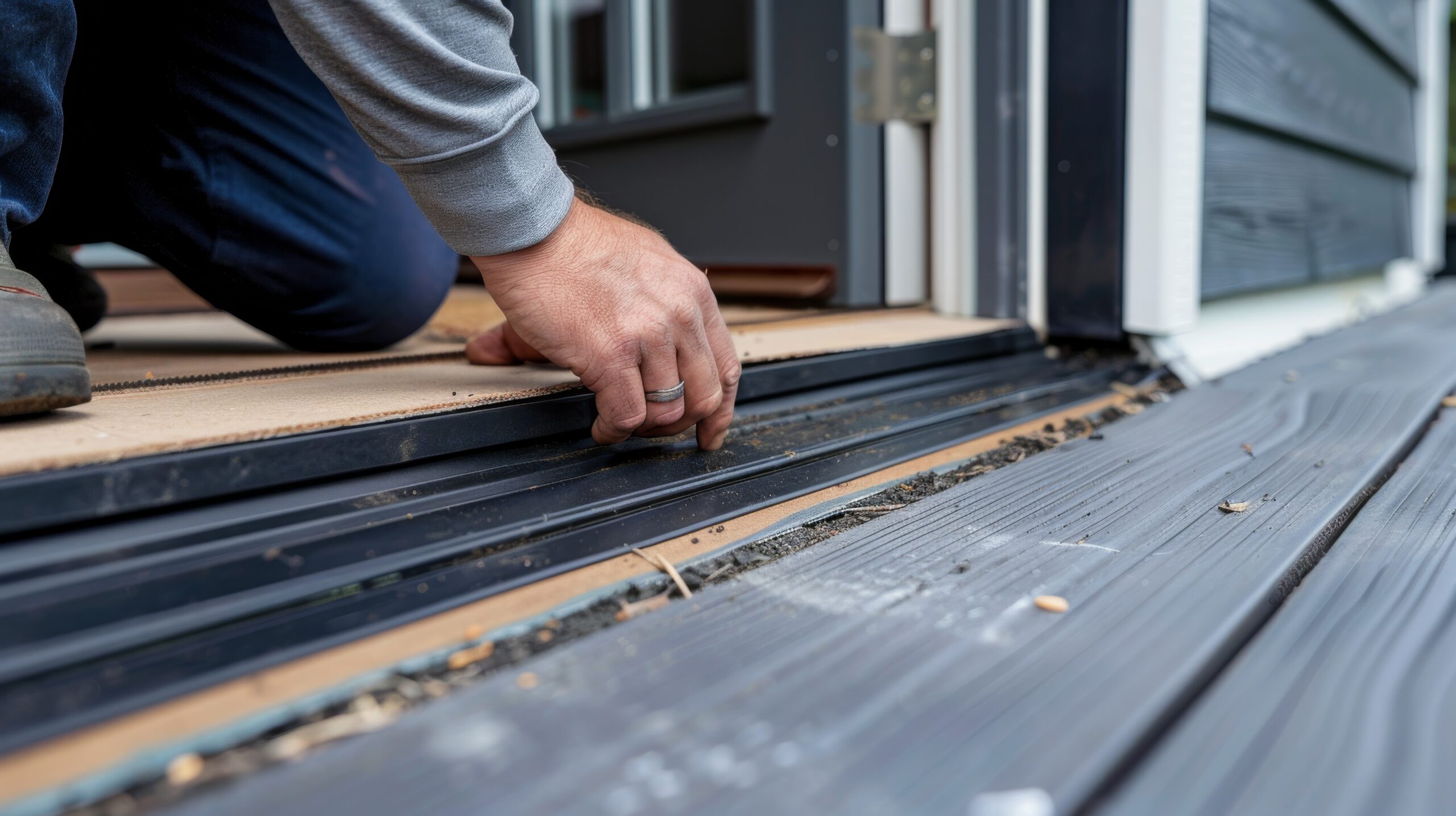
How Do I Weatherstrip French Doors? Here’s a Quick Answer:
To weatherstrip French doors, replace the kerf-in compression weatherstrip around the frame perimeter, install a new astragal gasket where the two doors meet, add corner pads at the bottom of the jambs, and replace or adjust the door sweep on the bottom of the active door.
The full process takes 2 to 3 hours for one pair of doors and costs $40 to $150 in materials. Done correctly, it can dramatically reduce drafts and air infiltration through your doors, lower your energy bills, and stop wind-driven rain from leaking into your home during Hampton Roads storms.
French doors have more seams, edges, and compression points than any other type of door.
In Virginia Beach, where multi-decade climate records show average relative humidity staying in the mid-to-high 70% range from May through August (and where muggy conditions become common from late May into early October) getting that seal right matters.
If you’re already dealing with drafty French doors, our guide on 5 tips for fixing drafty French doors covers the most common seal failures and quick fixes you can implement today.
What Tools and Materials Do I Need?
For a typical French door weatherstripping project, gather the following:
- Kerf-in compression weatherstrip (such as Q-Lon, the slippery nylon-covered foam recommended by This Old House): $20 to $40 per door. Choose a profile that matches your existing kerf width
- Astragal gasket: $15 to $30 per door. Order from your door manufacturer if possible
- Corner pads (corner seals): $5 to $10 per door. Triangular wedges that seal the bottom corners
- Threshold wedge pad: $5 to $15. The triangular pad behind the astragal at the threshold
- Replacement door sweep: $15 to $40. Aluminum carrier with a flexible rubber blade
- Exterior-grade silicone caulk: $8 to $12 per tube
- Rubbing alcohol or denatured alcohol for cleaning surfaces
- Putty knife, utility knife, hacksaw, screwdriver, tape measure
How Do I Weatherstrip French Doors Step by Step?
Step 1: Test the doors before you start
Close both doors and walk around them on a windy day. Hold your hand near every seam and seal. Note where you feel air movement. Look for daylight at the jambs, threshold, astragal, and the corners.
Do the dollar bill test: close the door on a dollar bill at several points around the perimeter and at the astragal. If you can pull it out without significant resistance, that section needs new weatherstrip.
Step 2: Check door alignment first
This is the step most homeowners skip, and it’s why their new weatherstripping fails within a year. If the doors are out of square or one panel is sagging, no amount of new weatherstripping will seal them properly. Look for an even gap of about 1/8 inch all the way around each door panel and 1/8 inch between the two panels.
If the doors are sagging:
-
- Tighten the hinge screws (often loose after years of use)
- If the screws spin in the hole, replace them with longer screws that bite into the framing
- For severely warped or twisted doors, you may need to plane the slab or replace the door
Our article on how to fix uneven French doors walks through the hinge adjustment and shimming process in detail.
Step 3: Remove the old weatherstrip
Pull out the old kerf-in weatherstrip from the channel around the door frame. Use a putty knife if it’s stuck. Scrape away any old adhesive residue and clean the channel with rubbing alcohol so the new strip seats properly.
For adhesive-style weatherstripping on older wood doors, peel it off carefully and clean the surface thoroughly.
Step 4: Install the new perimeter weatherstrip
For kerf-in style (most modern doors), press the new strip into the channel by hand. Start at one top corner and work down each side, then across the top. Cut to length with scissors or a utility knife. Don’t stretch the strip during installation, just press it firmly into place.
For adhesive style, cut to length, peel the backing, and press firmly. Avoid touching the adhesive surface with your fingers.
Step 5: Replace the astragal gasket
The astragal is the vertical strip on the inactive door panel where the two doors meet. Pull out the old gasket and press in the new one the same way you did the perimeter weatherstrip. Make sure the gasket runs the full height of the astragal with no gaps at the top or bottom.
Don’t know what an astragal is or how to replace it? Our detailed guide on what an astragal is and why it matters on French doors explains everything you need to know about this critical component.
Step 6: Install corner pads at the bottom of the jambs
The corners where the side jambs meet the threshold are notorious leak points because the weatherstrip can’t seal a 90-degree corner cleanly. Apply a small triangular foam pad at the bottom inside corner of each jamb to bridge the gap.
Step 7: Install or adjust the threshold wedge pad
Behind the astragal at the threshold, install a triangular wedge pad on top of the sill. This pad seals the gap where the bottom of the astragal meets the threshold. Without it, you’ll feel a clear draft at that point even after everything else is sealed.
Step 8: Replace the door sweep
If your active door has a worn or torn sweep, replace it. Cut the aluminum carrier to fit the width of the door slab, then trim the rubber blade to match. Screw it to the interior face of the door so the blade lightly touches the threshold. Tight enough to seal, loose enough that the door still opens easily.
Step 9: Caulk the exterior trim
Run a bead of exterior-grade silicone caulk along the joint between the door frame trim and the siding. Do not caulk the bottom of the threshold. That area needs to drain water out, so leave the weep path open.
Step 10: Test the seal
Re-do the dollar bill test all the way around the doors. Open and close the doors a few times to seat the new weatherstrip. After a few days of use, check again. Compression weatherstrip continues to settle into its final shape for about a week.
How Does Hampton Roads’ Coastal Climate Affect My Weatherstripping Choices?
Three things matter most when you’re sealing French doors in Coastal Virginia Beach and North Carolina
1. Material durability
Salt air degrades rubber and certain vinyl compounds faster than inland conditions. Look for EPDM rubber or silicone gaskets rather than basic vinyl or foam tape. They cost a bit more but last 3 to 5 times longer in coastal exposure.
2. Drainage matters more than caulking
Hampton Roads gets wind-driven rain. Your doors need to drain water out as well as block it from coming in. Never caulk the weep holes or the bottom of the threshold. The water that does get past the seals needs a way out.
3. Hardware corrosion accelerates seal failure
Corroded hinges, latches, and astragal slide bolts cause the doors to shift out of alignment, which then breaks the seal. Keep all metal hardware lubricated with a marine-grade silicone or PTFE spray (not WD-40, which attracts dirt). Check and tighten hinge screws every spring.
For doors with metal components showing rust or corrosion, our guide on 6 easy steps for removing rust from metal doors can help restore hardware before it fails completely.
When Is Weatherstripping Not Enough?
Weatherstripping is a maintenance task, not a cure for serious door problems. Consider replacing the doors entirely if:
- The slabs are warped, rotted, or visibly damaged
- The threshold or sill is rotting
- The frame is out of square because the house has shifted
- The doors are more than 15 to 20 years old and you’re replacing weatherstripping every year or two
- You can see significant condensation between the glass panes, which means the sealed glass unit has failed
- You feel cold air coming through the doors themselves even when the seals look fine. That points to a thin or single-pane glass unit with little insulation value
A modern fiberglass or Fibrex composite French door with factory-fit multi-point locks and precision weatherstripping seals more tightly than any retrofit project can achieve, and it does so for decades rather than years. Learn more about patio and entry door options in Virginia Beach and surrounding areas.
Planning a French Door Replacement Project?
If you’re considering full door replacement, our guide on determining double French door rough opening size explains how to measure correctly for new installation. For minor glass damage that doesn’t require full door replacement, see our article on how to replace a broken glass pane in French doors.
What Energy Savings Can I Expect?
The U.S. Department of Energy reports that air infiltrates into and out of a home through every hole and crack, with about 20% of that air infiltration coming through openings in windows, doors, and skylights. Replacing failed weatherstripping on French doors can realistically eliminate a significant share of the air leakage on those specific openings.
In Hampton Roads homes where summer electric bills run $200 to $400 per month, sealing one set of badly leaking French doors can return $50 to $150 per year in energy savings, depending on the size of the leak, HVAC use, electric rates, and how much conditioned air is escaping. The Department of Energy identifies caulking, sealing, and weatherstripping air leaks as one of the quickest energy- and money-saving improvements homeowners can make, meaning the materials can pay for themselves quickly when the leak is significant.
A note on tax credits: the federal Section 25C Energy Efficient Home Improvement Credit, which previously offered 30% back, up to $250 per door and $500 total, for qualifying ENERGY STAR exterior doors, was terminated for property placed in service after December 31, 2025 under the One Big Beautiful Bill Act. The IRS confirms: “You can claim the credit for improvements made through December 31, 2025.” New ENERGY STAR doors installed in 2026 no longer qualify for the federal credit, though they can still pay back through energy savings, comfort, and resale value. For resale context, the 2025 Remodeling Cost vs. Value Report lists vinyl window replacement at 76% of cost recouped at resale, while door projects are reported separately.
Frequently Asked Questions
How often should I replace French door weatherstripping?
In Hampton Roads’ climate, plan on inspecting weatherstripping every spring and replacing it every 5 to 7 years. Inland homes can often go 8 to 10 years between replacements.
Can I weatherstrip French doors in the winter?
You can, but compression weatherstrip is easier to install in moderate temperatures (50°F to 80°F). In cold weather the material is stiffer and adhesives don’t bond as well. Spring and fall are ideal.
Should I replace the threshold while I’m at it?
If the threshold is rotting, warped, or has loose sections, yes. A new threshold without new weatherstripping (or vice versa) usually doesn’t solve the problem.
Will weatherstripping reduce sound coming through the doors?
A little. Solid weatherstripping reduces airborne sound infiltration noticeably, but for major noise reduction you need an upgrade to thicker glass and a tighter overall seal, which usually means new doors.
My French doors leak water during heavy rain. Is that a weatherstripping problem?
Sometimes. Water leaks usually point to a failed threshold seal, missing sill pan, or improper flashing rather than weatherstripping alone. If new weatherstripping doesn’t solve the problem, you likely have a deeper installation or flashing issue that needs professional attention.
Considering New French Doors for Your Virginia Beach Home?
If you’ve been weatherstripping the same set of French doors year after year, it may be time to upgrade to a system that’s engineered for Hampton Roads’ coastal climate. Mr. Rogers Windows offers free, no-obligation consultations for Renewal by Andersen Frenchwood patio doors with factory-fit weatherstripping, Fibrex composite frames, and the energy efficiency to lower your bills for decades.
Get A Free In-Home Consultation
Learn more about our patio and entry door services in Virginia Beach.
Mr. Rogers Windows
📍 2100 Scenic Parkway, Suite 101, Chesapeake, VA 23323
📞 (757) 512-6242
🕐 Monday – Friday: 8:30am – 5:00pm | Saturday – Sunday: Closed
In Your Free In-Home Consultation: Discuss your needs and priorities. See samples of all door styles. Review color and customization options. Get precise measurements. Receive a detailed quote valid for one full year. No pressure, no obligation.
Mr. Rogers Windows and Doors is Hampton Roads’ exclusive source for Renewal by Andersen replacement windows and patio doors. Serving Virginia Beach, Norfolk, Chesapeake, Suffolk, Newport News, Hampton, Portsmouth, Yorktown, Williamsburg, Smithfield, Gloucester, Elizabeth City, Moyock, the Outer Banks, and surrounding communities since 1986.